Catscratch Beef Liver Wrapped in Wet Goat Fur
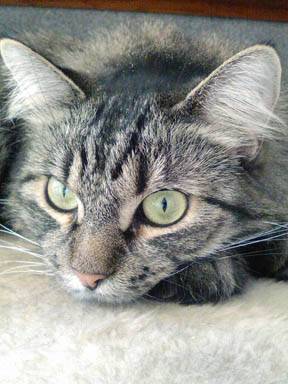
Photo by Laura Hedden
Ted Nugent fabricated true cat scratch fever (actually called cat scratch disease) almost a household name with his song in the late 1970s just most people still know very little about this infection other than it involves a fever spread by cat scratches. In fact, it involves infection by bacteria of the genus Bartonella. There are 24 Bartonella species, fourteen of which can infect humans and v of which are harbored past cats. The 5 Bartonella species harbored by cats are spread by fleas. The most well studied and near mutual Bartonella organism is Bartonella henselae. Classically, cats transmit the organism when they are parasitized by fleas, scratch themselves, and get infected flea dirt (digested host'southward claret excreted by fleas) in their claws, and scratch a person or another cat with their dirty claws.
The Human Disease
Infection with Bartonella henselae in an immunocompetent person (i.e. a normal, healthy person) person leads to true cat scratch disease. The inoculation site, a scratch from a claw containing bits of flea dirt, develops a small red crash-land called a papule. Nearly 2 to 3 weeks following contact with the infected cat, the lymph node in the area will swell and become painful, and a fever will develop. These signs by and large resolve on their own and the condition is minor though lymph node enlargement can persist for several months.
If the patient does not have a competent allowed system (in other words, they are very onetime, very immature, debilitated from another condition, etc.), i of several far more serious syndromes tin can result. The infection goes deeper into the body and causes spleen enlargement, and potentially encephalitis, heart valve infection, and other conditions. These syndromes are rare, simply they are potentially quite serious.
How Likely is it for a True cat to be Infected?
Since fleas conduct the bacteria, cats with insufficient flea control are at highest risk. This means cats living in climates that are warm and humid (conditions where fleas thrive best) are virtually likely to exist infected. If conditions are right, upwardly to 40% of cats in an expanse may exist infected. If a person is diagnosed with true cat scratch disease, there is a ninety% chance that the cats they ain will be found infected equally well.
This sounds somewhat concerning for the cat-owners in a flea area but it is important to realize that an infected cat cannot transmit the infection without a claw full of flea dirt. If the fleas are removed from the infected true cat, there will be no flea dirt in the glaze and no gamble of disease transmission. Experimental studies accept not been able to demonstrate true cat-to-cat transmission in cats that mutually groom each other, fight with each other, mate with each other, or share food or litter with each other, nor has transmission been demonstrated between infected mother cats and their kittens. Short of an actual blood transfusion with an infected true cat, fleas or ticks are needed to spread the infection.
Do Infected Cats go Ill?
This is a highly controversial question. It was only relatively recently discovered (1992) that cats themselves were more than elementary carriers of Bartonella henselae and that they could actually go infected themselves. Several illnesses seem to take been associated withBartonella infection (fever, deep middle inflammation, lymph node enlargement, muscle hurting, reproductive failure, and bacterial heart valve deposits called endocarditis) but these seem to exist isolated cases for the most office. The Bartonella organisms are highly adapted to live in the feline torso without causing disease and it is only in rare situations that cats actually experience problems from this infection.
It has been suggested that Bartonella infection may exist at the root of numerous chronic inflammatory conditions of the cat. With such loftier numbers of infected cats occurring regionally (upwards to forty%), it is going to exist difficult to prove 1 way or the other whether at that place is a real association or just coincidence.
Tin can Dogs go Infected?
The brusk answer is: yes, though the species they go is Bartonella vinsonii rather than Bartonella henslae. Fleas may carry the infection as they practise for cats, plus it appears that ticks may too be carriers. Since there are numerous infectious agents spread by ticks and it is not unusual for a canis familiaris to have multiple tick-borne infections, it is difficult to determine which infection is causing which signs.
Is my Cat Infected?
Testing is not recommended for the average cat even if the cat is ill. Testing would be a proficient idea for whatever cat that may go a claret donor; for the rare ill true cat where Bartonella-related disease is actually being considered; if a man in the home has been diagnosed with a Bartonella-related affliction; or if there is an immune-compromised person in the home, in which case testing is actually important.
There are 5 tests available to detectBartonella henselae : ELISA, IFA, PCR, Culture, and Western Blot. All the tests take pros and cons and no method seems to shine above the others.
The ELISA, IFA, and Western Blot tests are tests for antibody detection, the idea existence that if antibodies againstBartonella are there thenBartonella must be there as well. For most diseases where antibiotic levels are used to establish a diagnosis, a minimum titer or antibody amount is considered necessary to say "Yes, this patient is infected." A problem with this is that we know that upwardly to xi per centum of cats withBartonella organisms happily circulating in their bloodstreams will not brand antibodies and will thus examination negative. At least this ways that when the test is negative there is an 89 percent or greater chance that the true cat is truly negative. For screening, this kind of antibody testing is frequently paired with PCR testing.
PCR is a very sensitive DNA examination for Bartonella but because the organism merely intermittently circulates, faux negatives can consequence if non very much Bartonella DNA is circulating. Results from PCR testing can apace distinguish different species of Bartonella.
The most reliable exam is the blood culture; withal, several consecutive cultures are needed because the organism tends to merely broadcast intermittently. A positive culture is proof of infection though a negative culture may simply not accept been taken at the time when organism is circulating.
In humans, a delayed hypersensitivity skin examination is used as part of the diagnostic criteria for cat scratch affliction but this test has not been useful in cats. In this test, like to the tuberculosis test nigh of us are familiar with, a scratch on the peel is made and a reaction to the introduced antigens may occur either right away or in approximately 48 hours (delayed hypersensitivity reaction). Cats are poor delayed hypersensitivity responders.
All in all, it is hard to dominion out a true cat as a carrier of a Bartonella organism. If results of testing are suggestive of infection, treatment can be considered if the cat is truly believed to have illness from the infection or if in that location is realistic business about exposure to immune compromised person.
Treatment for Cats
An array of antibiotics have been used confrontingBartonella henselae in cats: clavulanic acid-amoxicillin combination, azithromycin, doxycycline, and quinolone class medications (enrofloxacin, marbofloxacin, etc). Efficacy has been mixed andBartonella henselae apace becomes resistant to therapy. Handling is currently recommended for cats showing symptoms of disease or for cats living with immune-compromised individuals. Handling lasts a minimum of iii weeks.
Preventing Human Infection of Bartonella: Guidelines from the Centers for Disease Control and Prevention
Guidelines for Prevention of Human Infection
The following guidelines have been published past both the CDC and the European Advisory Board on Cat Diseases:
- Immune-suppressed people should prefer simply apparently healthy cats less than 1 year of age.
- Allowed-suppressed people should not prefer from the shelter or from multi-true cat homes.
- Cats belonging to immune-compromised people should be kept indoors simply and should non take contact with cats that go outdoors.
- Claws should be kept trimmed.
- True cat scratches should be promptly washed. (This goes for everyone, not merely immune-compromised people.)
- Flea control should be strict.
Preventing Disease
No information support chemoprophylaxis (i.e. preventive drug treatment) for Bartonella-associated disease. In simpler terms, if a suspicious true cat scratch has occurred, in that location is no indicate in using medication to prevent infection.
References
The Winn Feline Foundation
Source: https://veterinarypartner.vin.com/default.aspx?pid=19239&catId=102903&id=4952003
0 Response to "Catscratch Beef Liver Wrapped in Wet Goat Fur"
Post a Comment