what is used to make butcher block oil
There is much conflicting data regarding which oils and substances are appropriate for use to safely maintain cut boards or butcher blocks. This post-obit list volition help place which products you should use to both sanitize and keep your board looking beautiful for years to come.
Safe and Recommended
Mineral Oil
Mineral oil (sometimes called liquid paraffin) is a not-toxic, non-drying production derived from petroleum that is colorless, odorless, and flavorless. Its properties prevent water absorption, which makes food-grade mineral oil (equally determined by the Federal Drug Assistants) a pop pick for wooden kitchen items such as wooden spoons, bowls, and, of grade, cut boards and butcher blocks. The cardinal word here is food-safe, as there are types of mineral oils that are non safe for human consumption; these are ofttimes used equally lubricants for mechanism or found in auto or hardware stores.
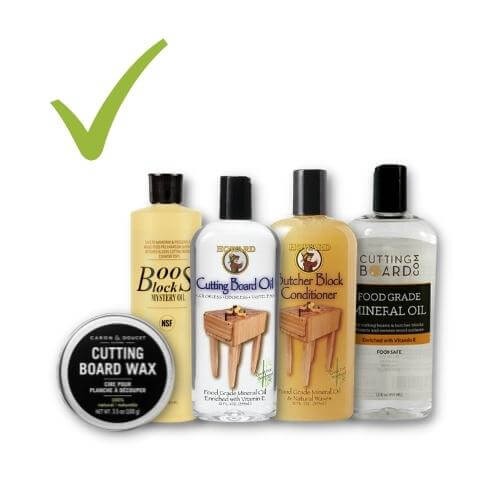
If you are worried near selecting the right mineral oil, production labeled as "white mineral oil" are considered food rubber, as these are refined to a certain degree past other oils. E'er make certain to carefully read the product'southward labeling if you are unsure virtually its proper apply. The safest route of class is to purchase a mineral oil specifically blended for use in cutting boards such a Howard's Cutting Board Oil or our own brand of Food Grade Mineral Oil.
Regular awarding of mineral oil will foreclose cut boards from becoming dry out and brittle, which tin can crusade a cracked board. A lath that is treated with oil also prevents liquids from penetrating the board, which is ofttimes the source of germs and bacteria.
Beeswax
Beeswax is as well a pop selection for cut board maintenance. Its a natural wax produced in the bee hives of honey bees and has a diverseness of applications. Use beeswax to hydrate, smooth, and waterproof a cutting board.
You can buy conditioners in readily available bottles such as Howard's Butcher Block Conditioner or melt 1 part beeswax and combine with 4 parts mineral oil in a pot to brand your own blend.
In addition, we at present carry a pure plant based, vegan cutting lath wax, fabricated from rice and kokosnoot. This is a expert selection for those allergic to bee pollen or propolis (beeswax) or simply those that are strict vegan.
Coconut Oil (Refractionated)
Coconut oils have recently become highly pop for a variety of purposes, peculiarly in dazzler, because information technology is rich is saturated fats that are good for skin wellness. Unfortunately, all fats exposed to air eventually go rancid and kokosnoot oil is not allowed (fifty-fifty though some bloggers claim otherwise). Yet, a select group of coconut oils are refined using a refractionation process, which is a fancy way of staying that the oils take been steam distilled. During this distillation procedure, kokosnoot oil is separated then that the long-chain triglycerides (LCT) are removed and only the medium chain triglycerides (MCT) are left. This leaves an well-nigh pure oil that will Non become rancid, is shelf stable and is superior to most other oils for treating not only cutting boards, but your kitchen utensils, salad bowls, countertops... y'all get the thought.
Caron and Doucet's Cutting Lath Oil is a kokosnoot based cutting board oil that is food safe and has added lemon oil essence for antibacterial purposes. Annotation that not all coconut oils should be considered food safe!
Carnauba
Also known every bit Brazil wax, this wax is derived from the leaves of a palm tree native to Brazil. Sometimes called "the queen of waxes," carnauba is prized for its sleeky finish and water resistance and is oft used in automobile waxes, polishes, cosmetics, and even dental floss. Like beeswax, commercially bachelor cutting lath creams and oils often incorporate a mixture or carnauba, beeswax, and mineral oil.
Blistering Soda
What can't baking soda be used for? You tin safely use baking soda to remove stubborn stains from a cutting board or butcher block. Sprinkle baking soda over the offensive spot and rub with a cloth, brush, or sponge dipped in hot h2o.
Lemon Juice
If your board begins to smell, 1 of the easiest tricks is to cut a lemon in half and run information technology beyond the entire surface. The ascorbic acrid in the lemon both reacts with and oxidizes organic material (leaner and fats) that are the crusade of smells and stains. The natural lemon oil also forces any soluble materials to be removed as well.
Use With Caution
Tung Oil
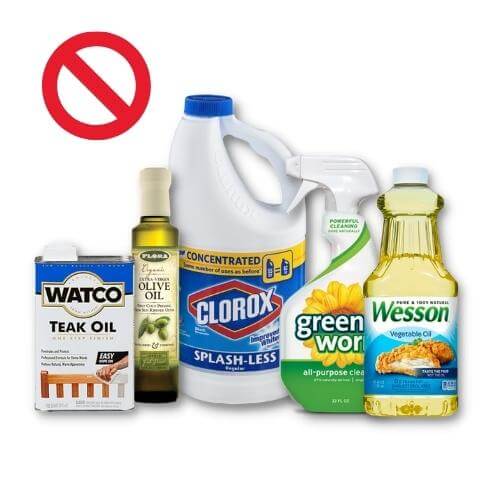
An oil derived from the tung tree originating in southern China, it is very popular in woodworking for creating a satin look with a slight golden tint. Yet, there are two reasons to be cautious: 1) some people are terribly allergic to tung oil every bit information technology is made from a nut tree. 2) The proper noun "tung oil" is frequently used by paint and varnish manufacturers as a generic name for a production that contains a minor amount of oil or provides a similar finish. Be cautions of tung oil varnishes and paints that very likely contain toxic chemicals not meant for human consumption. If y'all use tung oil, expect for 100% pure tung oil.
Linseed Oil
This oil is obtained by pressing the flax plant. Raw linseed oil is safe for homo consumption. However, boiled linseed oil is heated and treated with chemicals that make it toxic for humans. Linseed oil is prized amongst woodworkers for its water-repelling properties and luster after being applied. However, as an organic oil, rancidification is a possible drawback. Rancidity is a common problem with all organic oils caused past hydrolysis and/or autoxidation of fats. For usa humans, this means a rank, unpleasant smell or taste lingering in the board. Having said this, linseed oil does not go rancid as quickly as other oils, and some people say information technology doesn't become rancid at all. This could very well be a case of using linseed oil only if you know the source and quality.
Walnut Oil
Extracted from English walnuts, walnut oil is like to linseed oil with a few added drawbacks and benefits. Commencement, information technology comes from a nut, so be cautious for allergic family members or guests. Information technology is also very quite expensive, and like linseed oil, volition eventually go rancid. The 1 do good is that walnut oil smells great!
Coconut Oil (Refined, Virgin or Non-Candy)
An edible oil extracted from the meat of matured coconuts, coconut oil is an increasingly popular substance used to maintain cutting boards and butcher blocks. Considering of its high saturated fat content, it is tedious to oxidize and is therefore resistant to rancidification. That said, there are reports of boards that accept been treated with coconut oil beginning to scent after a long period of fourth dimension.
Coconut oil has a plethora of uses: equally pare moisturizer, soap, for cooking and frying, and even burning for candle light. It is as well nut-free despite its name!
CuttingBoard.com now is an exclusive carrier of rubber kokosnoot cutting board oil. This is a specifically refined coconut oil that does not go rancid and has no kokosnoot flavor, scene and is pure liquid at normal temperatures. This oil is expert for those that would like to apply a purely natural or plant based oil on their cutting board or cake.
Bleach
All of us are familiar with the disinfecting properties of bleach. It quickly reacts with microbial cells to denature and destroy many pathogens. High levels of bleach are toxic to humans, however. The skillful news that that a diluted bleach solution is safe for you and your cut board. Add one teaspoon of bleach to ane quart of water and flood the lath. Rinse with hot h2o afterward and then towel try. By no means use undiluted bleach on your cut boards or butcher blocks, as this is an dangerous concentration and could also discolor your board. Most importantly, never soak your board in any bleach and h2o mix.
Non Recommended
Vegetable Oils
Olive oil, corn oil, and sunflower oil, should never be used to maintain a cutting lath or butcher block. As touched on above, these oils experience rancidification – a process that yields a rank scent and unpleasant gustatory modality. Equally a cut board touches your food, substances that tin can turn rancid should be avoided. Food should ever be tasty!
Varnish
A transparent, difficult, protective finish or picture used in woodworking, varnish is too called a shellac or lacquer. While these products protect woods and provide a beautiful end, they are inappropriate for maintaining a cutting board. Most varnishes are fabricated from a solvent that preserves the liquid in the container and evaporates as the finish dries, leaving a binder or resin that protects the forest's surface. This residual resin will flake and peel off when exposed to precipitous objects like knives. This is problematic for two reasons: ane) the substances in the varnish can be toxic to humans and 2) having little bits of varnish in food can ruin taste and aesthetic appeal.
Rubbing Alcohol
When cutting boards and butcher blocks are not properly maintained they tin become dry out and cleft. Rubbing alcohol, while a groovy disinfectant, is extremely drying. Using it on wood would is counterproductive to maintenance. To disinfect apply a diluted bleach solution or soap instead.
For more than information on how to safely upkeep and sanitize your cutting board, read our guide on how to oil and maintain a cutting board here.
Sources:
http://www.accessdata.fda.gov/scripts/cdrh/cfdocs/...
http://greenhomeguide.com/know-how/article/selecti...
Source: https://www.cuttingboard.com/blog/what-type-of-oils-are-safe-to-use-on-your-cutting-board/
0 Response to "what is used to make butcher block oil"
Post a Comment